
For millions across Africa, basic financial services have long been out of reach. Imagine living hours away from the nearest bank, facing high fees for simple transactions, or being a small business owner unable to accept payments from customers abroad. This is the reality of financial exclusion, a persistent challenge that has limited economic growth and individual opportunity. But a powerful wave of change, driven by financial technology, is rewriting this story.
At its core, fintech is about using technology to make financial services more efficient, accessible, and user-friendly. In Africa, its impact is nothing short of revolutionary.
The Old Barriers to Financial Inclusion
Traditionally, accessing financial services in Africa meant dealing with significant hurdles: geographical distance, with limited physical bank branches especially in rural areas cutting many people off from the formal financial system; high costs, with fees for opening and maintaining a traditional bank account prohibitively expensive for a large portion of the population; and strict requirements, with onerous documentation and high minimum balances excluding many individuals and small businesses. These barriers created a massive unbanked and underbanked population, relying on cash and informal systems that are often inefficient and insecure.
How Fintech Is Powering the Change
Fintech companies are dismantling these old barriers by leveraging the one piece of technology nearly everyone has: a mobile phone.
Digital wallets and mobile payments turn a phone into a bank in your pocket, letting users store, send, and receive money instantly with just a few taps — no traveling long distances or standing in queues. Virtual accounts give users the benefits of a bank account without needing a traditional bank, providing unique account numbers to receive payments from local and international sources — a game-changer for freelancers, online merchants, and businesses locked out of the international banking system. Micro-payout solutions automate the process of paying multiple suppliers or remote workers, letting businesses send small, frequent payments to many recipients efficiently and cost-effectively.
The Real-World Impact: Inclusion, Speed, and Growth
The shift to digital finance is about more than convenience; it’s about empowerment. Fintech is bringing millions of people into the formal financial system for the first time. Transactions that once took days now take seconds, boosting productivity for businesses and providing peace of mind for individuals. And by providing accessible tools for receiving payments, managing cash flow, and reaching new markets, fintech is fueling the growth of small and medium-sized enterprises — the backbone of Africa’s economy.
The Journey Ahead
While the progress is exciting, the road to full financial inclusion has its challenges. Creating a supportive regulatory environment, building user trust through security and education, and expanding digital infrastructure like internet connectivity are crucial next steps, requiring collaboration between innovators, governments, and communities.
At meCash, we believe that access to financial services is a fundamental right, not a privilege. By developing intuitive and powerful solutions like digital wallets, virtual accounts, and seamless payout systems, we’re committed to breaking down the remaining barriers.
Related reading
The 5 Best Cross-Border Payment Solutions for Freelancers in 2025
A comparative review of popular platforms — meCash, Payoneer, PayPal, Stripe, and Revolut — focusing on low fees and ease of use for freelancers getting paid across borders.
How meCash Is Solving Africa's Payment Fragmentation with a Unified API
African businesses don't just have a payment problem, they have a fragmentation problem. A startup paying vendors in Kenya needs M-Pesa. Another wants salaries in Ghana via mobile money. Here's how one integration replaces the tangle.
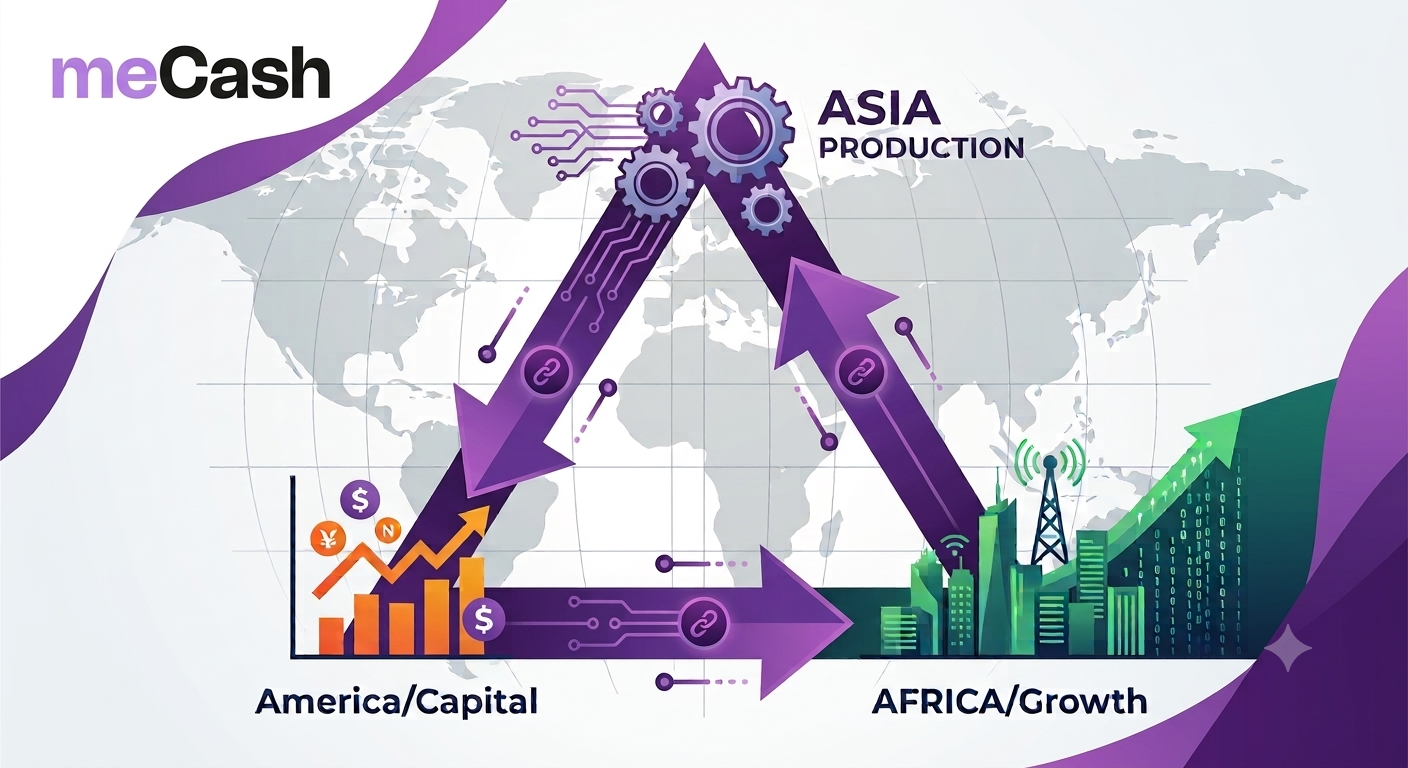
The Asia-America-Africa Trade Triangle: Why Cross-Border Payments Are the Missing Link
A component manufacturer in Shenzhen ships smartphone parts to Vietnam. A US brand pays in dollars. The finished phones sell in naira in Lagos. That single trade touches three financial systems before it closes — and that's where the friction hides.
Subscribe to our newsletter
Get the latest insights on cross-border payments, API infrastructure, and fintech trends delivered to your inbox.