

Expanding into the global marketplace offers immense opportunities for growth, but it also comes with a unique set of operational hurdles. One of the most significant is the complexity of international payments. For businesses, moving money across borders can be a minefield of high costs, frustrating delays, and hidden risks.
1. Exorbitant Costs and Hidden Fees
International payments are notorious for costs that go beyond the visible transaction fee — intermediary bank fees each time money routes through the traditional SWIFT system, unfavorable exchange rate markups that are a hidden cost eating into profits, and receiving fees the recipient’s bank may also charge. The fix: use fintech platforms designed to bypass the correspondent banking system with transparent fee structures and mid-market rates, negotiate better rates if you have high transaction volumes, and compare providers rather than defaulting to your traditional bank.
2. Slow and Unpredictable Transaction Speeds
Waiting several business days for a payment to clear is a significant drag on efficiency, disrupting supply chains and straining cash flow. The fix: use fintech providers with access to real-time payment rails that settle in seconds or minutes, automate payment workflows by integrating with your accounting software, and choose providers with direct relationships with local banks that bypass slow traditional channels.
3. Foreign Exchange Risk
If the exchange rate moves unfavorably between invoicing and settlement, a business can lose real money, making forecasting difficult. The fix: use forward contracts to lock in a specific exchange rate for a future transaction, hold multi-currency accounts so you can wait for a more favorable rate, and consider currency-adjustment clauses in contracts with international partners to share the risk.
4. Heightened Security Risks and Fraud
International transactions are a prime target for fraudsters, with more parties involved creating more opportunities for account takeovers and data breaches. The fix: implement multi-factor authentication for all payment initiations, train your team to recognize phishing and social engineering, and partner with providers offering end-to-end encryption and real-time, AI-driven fraud monitoring.
5. Navigating Complex Regulations and Compliance
Businesses must comply with AML, KYC, and data protection laws in every jurisdiction they operate in, and failure to comply can mean steep fines. The fix: leverage compliance-as-a-service features built into modern payment platforms that automate KYC checks and screen against global watchlists, work with legal and financial experts specializing in international trade, and maintain meticulous transaction records for audits.
6. Lack of Transparency and Payment Tracking
With traditional banking, once a payment is sent it often enters a black box, making it difficult to track and leading to time-consuming manual follow-ups. The fix: demand providers with real-time, end-to-end tracking, and insist on transparent pricing that clearly breaks down fees and uses the mid-market exchange rate.
7. Poor Integration and Lack of Localized Payment Options
If your payment systems don’t integrate with your accounting software, you get data silos and manual reconciliation headaches — and failing to offer payment methods trusted in your customer’s local market means friction at checkout and lost sales. The fix: prioritize platforms with robust APIs for seamless integration, and partner with a provider that supports local payment options like digital wallets, local bank transfers, and buy-now-pay-later schemes.
Conclusion
While the challenges of international payments are significant, they are not insurmountable. By moving away from outdated, traditional systems and embracing modern fintech solutions, businesses can transform this area of their operations from a source of friction into a strategic advantage.
Related reading
The 5 Best Cross-Border Payment Solutions for Freelancers in 2025
A comparative review of popular platforms — meCash, Payoneer, PayPal, Stripe, and Revolut — focusing on low fees and ease of use for freelancers getting paid across borders.
How meCash Is Solving Africa's Payment Fragmentation with a Unified API
African businesses don't just have a payment problem, they have a fragmentation problem. A startup paying vendors in Kenya needs M-Pesa. Another wants salaries in Ghana via mobile money. Here's how one integration replaces the tangle.
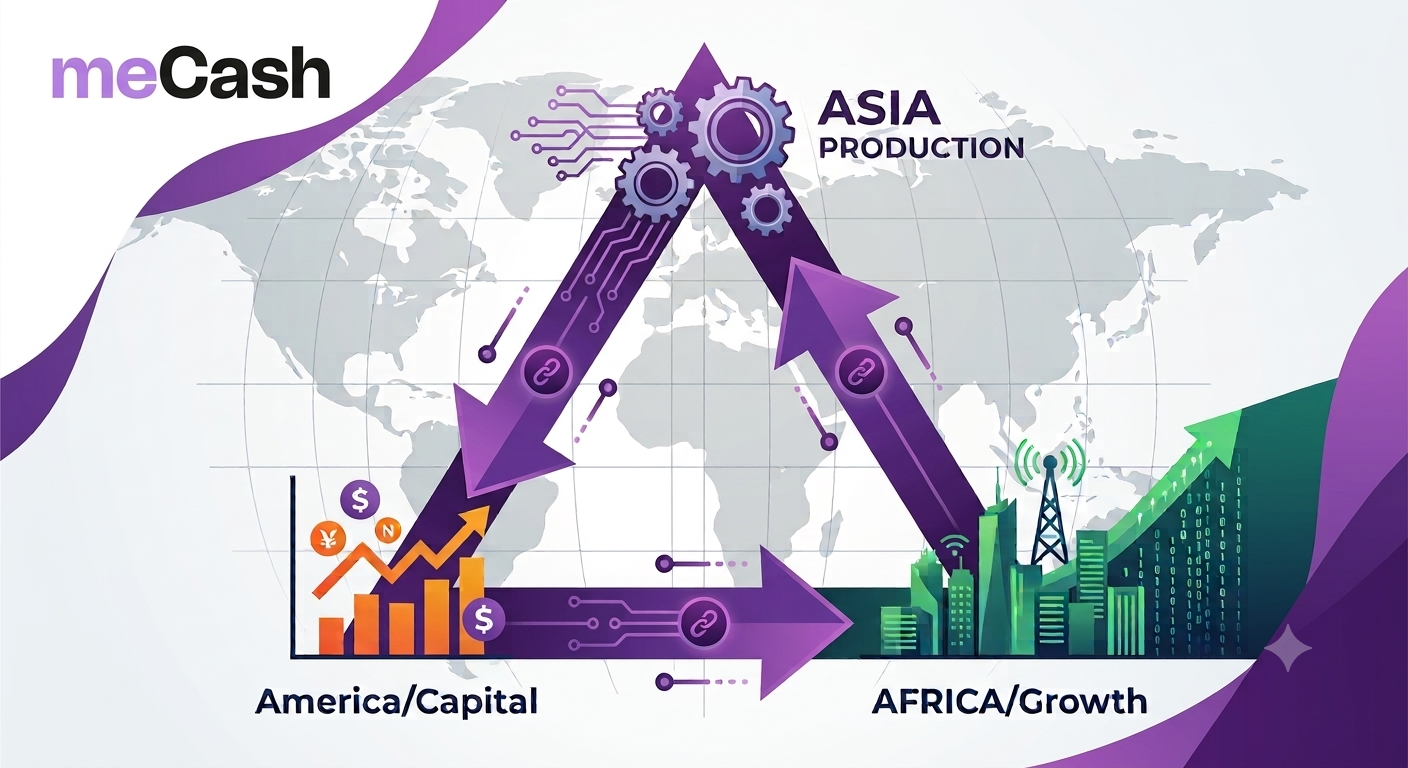
The Asia-America-Africa Trade Triangle: Why Cross-Border Payments Are the Missing Link
A component manufacturer in Shenzhen ships smartphone parts to Vietnam. A US brand pays in dollars. The finished phones sell in naira in Lagos. That single trade touches three financial systems before it closes — and that's where the friction hides.
Subscribe to our newsletter
Get the latest insights on cross-border payments, API infrastructure, and fintech trends delivered to your inbox.