
With the global cross-border payment market projected to exceed $250 trillion by 2027, the money you send, receive, and manage is part of the largest financial flow in human history.
Your challenge is to ensure that your share of this flow moves with maximum efficiency and minimal cost. The era of accepting opaque fees and week-long delays is over. For the expanding business, the global freelancer, or the individual supporting family overseas, choosing a payment provider is a strategic decision, not an administrative one.
The Anatomy of a Transfer: Uncovering the True Cost
Your primary focus must be the total cost, a figure often deliberately obscured. Transfer fees are the upfront charges, flat or percentage-based — be wary of “fee-free” marketing, since these providers recoup their costs elsewhere. Exchange rate markups are the hidden profit center: providers rarely offer the mid-market rate, instead adding a spread that’s pure profit for them and a direct cost to you.
Demand absolute transparency. Before committing to a transfer, check an independent currency converter for the current mid-market rate and compare it to the provider’s offered rate to calculate their markup. The ultimate test is always comparing the final amount the recipient will actually receive.
From Days to Seconds: Demanding Speed and Certainty
The five-to-seven business day wait for international transfers is outdated. Traditional banks routing through SWIFT can still take several days with little in-progress visibility, while fintech providers like meCash, Wise, Remitly, and Payoneer have built their reputation on speed, leveraging local payment networks to complete transfers in hours or minutes.
Look beyond the advertised speed and demand a guaranteed delivery time — for business-critical payments, knowing precisely when funds will land is essential for managing cash flow, inventory, and supplier trust.
Fortress-Level Security: Trust and Compliance Are Non-Negotiable
Moving funds internationally means navigating a labyrinth of global regulations designed to combat fraud and money laundering. Confirm the provider is licensed by a top-tier financial authority — the FCA in the UK, FinCEN in the US, or the equivalent in your jurisdiction. Non-negotiable security standards include PCI DSS compliance for card processing and robust data protection enforced through encryption and mandatory two-factor authentication. Leading providers are also deploying AI and machine learning to identify and neutralize fraudulent transaction patterns in real time.
Essential Features for Growth and Convenience
A provider should be a partner in your growth, not an operational bottleneck. Ensure they service your specific payment corridor, and check the payout options — the ability to deliver funds directly to a local bank, a mobile money wallet like M-Pesa, or a regional payment system like PIX in Brazil or UPI in India is a mark of a superior service. For businesses, a well-documented API is essential for integrating with accounting software or e-commerce platforms. The capacity to hold balances in multiple currencies lets you receive payments and pay suppliers without conversion fees on every transaction, and batch payments — paying multiple recipients at once — are a significant time-saver.
A Strategic Checklist for Your Decision
Define your use case and note your average transaction size, key destinations, and frequency. Shortlist two to three highly-rated providers based on your required payment corridors, including your traditional bank for a true benchmark. Calculate the total cost — fee plus exchange rate markup — for each contender on a typical transfer amount. Scrutinize licensing, regulatory compliance, and security protocols, and check customer reviews for reliability and support quality. Test whether the platform is intuitive and the transfer process transparent. And probe the support system — a crisis doesn’t wait for office hours.
The cross-border payment landscape will continue its rapid evolution, with stablecoins and central bank digital currencies promising even greater efficiency on the horizon. Using this framework to evaluate providers today lets you confidently select a partner that’s secure, cost-effective, and powerful enough to meet the demands of tomorrow.
Related reading
The 5 Best Cross-Border Payment Solutions for Freelancers in 2025
A comparative review of popular platforms — meCash, Payoneer, PayPal, Stripe, and Revolut — focusing on low fees and ease of use for freelancers getting paid across borders.
How meCash Is Solving Africa's Payment Fragmentation with a Unified API
African businesses don't just have a payment problem, they have a fragmentation problem. A startup paying vendors in Kenya needs M-Pesa. Another wants salaries in Ghana via mobile money. Here's how one integration replaces the tangle.
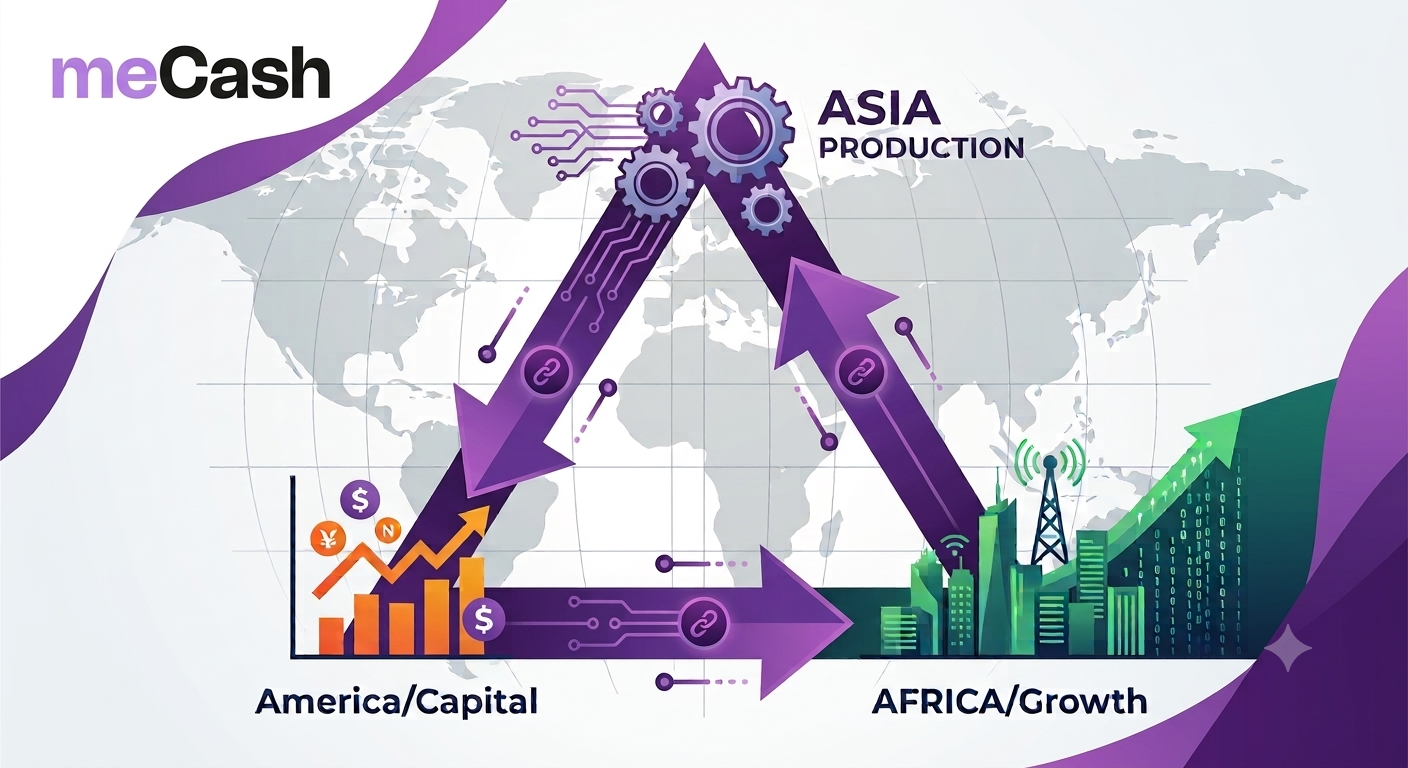
The Asia-America-Africa Trade Triangle: Why Cross-Border Payments Are the Missing Link
A component manufacturer in Shenzhen ships smartphone parts to Vietnam. A US brand pays in dollars. The finished phones sell in naira in Lagos. That single trade touches three financial systems before it closes — and that's where the friction hides.
Subscribe to our newsletter
Get the latest insights on cross-border payments, API infrastructure, and fintech trends delivered to your inbox.