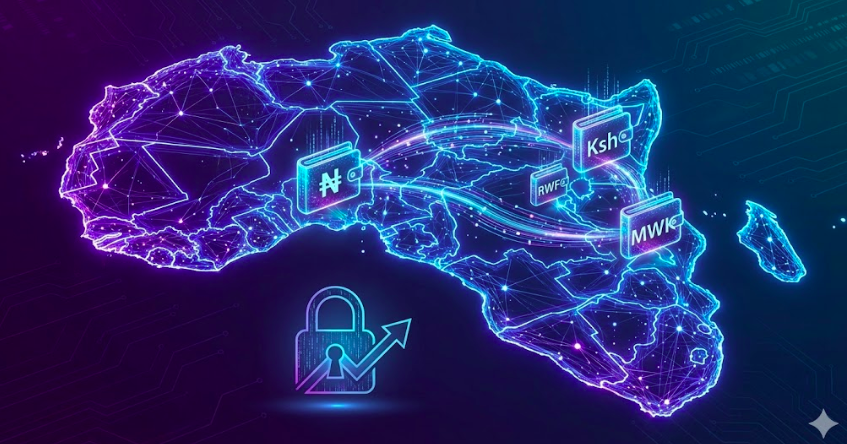
African businesses don’t just have a payment problem, they have a fragmentation problem.
A startup paying vendors in Kenya needs M-Pesa. Another wants to send salaries in Ghana via mobile money. A Nigerian fintech processing payouts across Rwanda, Ivory Coast, and South Africa faces a tangle of providers, rebuilt infrastructure, and settlement delays. meCash is quietly becoming the answer. Instead of stitching together disconnected systems, it gives companies a single infrastructure layer for collections and payouts through its Mobile Money API and Payout API. For developers and fintech teams, that changes everything.
The Fragmented Reality of African Payment Infrastructure
The truth is Africa’s payment rails shouldn’t be this difficult, but alas it is.
Every market brings different mobile money operators, bank systems, compliance rules, and payment habits. Businesses end up juggling multiple APIs, separate payout workflows, currency headaches, and complex reconciliation — all while engineering teams spend more time maintaining integrations than building product. As a company grows, so does the weight of its payment infrastructure. That’s why infrastructure providers are becoming the backbone of African fintech.
meCash’s Infrastructure Layer: One Integration, Multiple Payment Rails
meCash strips away that complexity by providing a single API connection gives access to multiple payment rails across markets, eliminating the need to integrate with every local operator individually. The hidden cost of expansion — new integrations, settlement workflows, wallet systems, and compliance processes — is absorbed by the infrastructure layer underneath.
Mobile Money API: Unlocking Africa’s Dominant Payment Method
The Mobile Money API tackles a real bottleneck. For most Africa countries, mobile money is the primary way millions of people transact daily for business, salaries, bills, and savings. Yet integrating mobile wallets cross-border has traditionally been slow and fragmented. meCash lets businesses collect payments directly from mobile wallets across multiple countries without building per-operator integrations, freeing teams to focus on growth and acquisition rather than months of payment plumbing.
Payout API: Automating Disbursements Across Borders
The Payout API might be even more critical. Sending money reliably across Africa at scale — to vendors, freelancers, employees, creators, marketplace sellers, and customers — quickly becomes an operational mess when multiple countries are involved. meCash enables programmatic disbursements via bank transfers and mobile money across markets, so businesses automate payouts without rebuilding logic for every new territory. What starts as a convenience becomes a structural advantage when manual operations hit their breaking point.
Why Payment Infrastructure Matters for African Startups
For African startups, operational complexity kills momentum faster than a lack of demand. Each new market adds more payment systems, compliance layers, and risk. Infrastructure providers like meCash absorb that complexity, letting companies redirect energy from fixing payment operations to scaling products and entering markets faster. In a rapidly growing digital economy, fragmentation remains one of the continent’s biggest bottlenecks.
Building the Rails for Africa’s Digital Economy
The next generation of African fintech success stories won’t just be consumer apps. The rails underneath — APIs, wallet infrastructure, mobile money integrations, payout systems, and cross-border transaction layers — will power every marketplace, payroll platform, remittance service, and commerce tool. All of them depend on one thing: the reliable movement of money. That’s the layer meCash is building for. In Africa, solving payments isn’t about convenience anymore — it’s about making scale possible.