Introduction
ISO 20022 is not the most glamorous topic in fintech. It is a messaging standard ;a technical specification for how financial institutions communicate with each other. But the changes it is enabling in cross-border payments are significant, practical, and worth understanding even if you are not a payments engineer.
This blog explains what ISO 20022 is, what it changes, and why its widespread adoption is quietly transforming the cross-border payments landscape.
What Is ISO 20022?
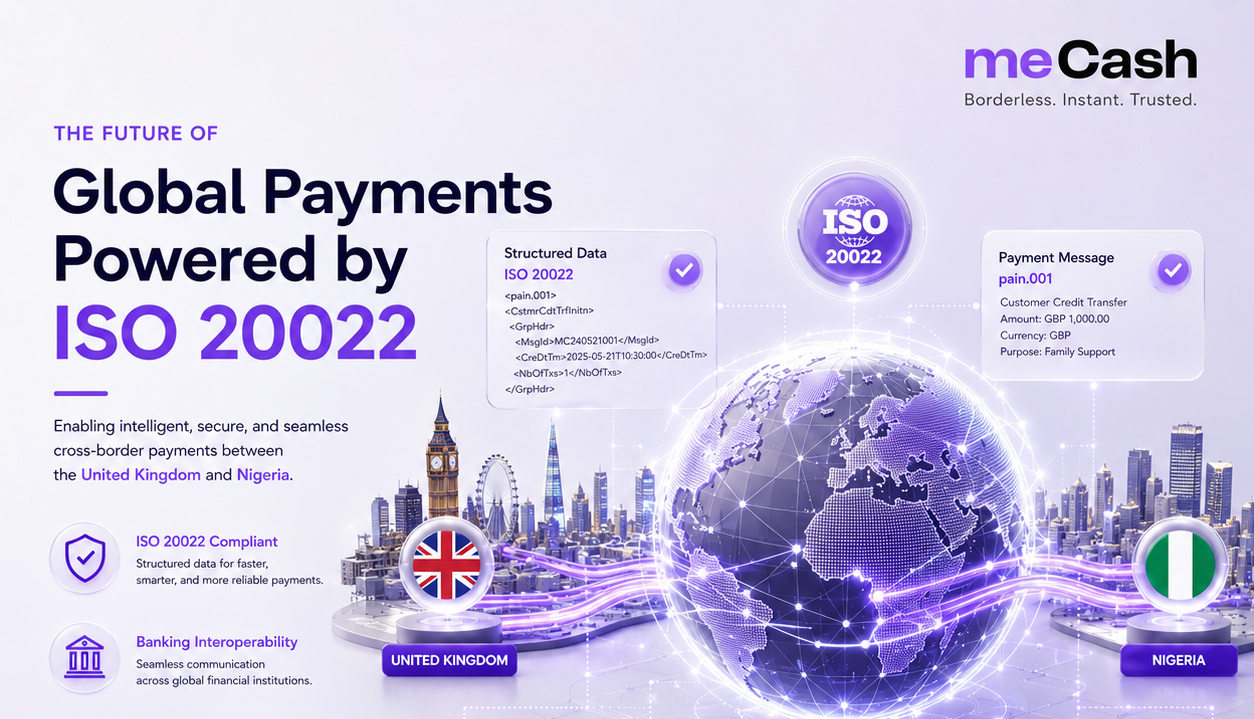
ISO 20022 is a global standard for financial messaging. When banks, payment systems, and financial market infrastructures send messages to each other to instruct a payment, confirm a settlement, or report a transaction . Those messages need to follow a format that both sides understand.
For decades, the dominant standard for international payments was SWIFT MT, a format that dates back to the 1970s. MT messages are limited in how much information they can carry. Fields are constrained, data is unstructured, and many details that would be useful for compliance, reconciliation, and transparency simply cannot be included.
ISO 20022 changes all of this. It uses a richer, more structured data format that can carry significantly more information in a standardised way. Think of it as upgrading from a short text message to a detailed structured form.
What Is Changing Right Now
By the end of 2025, many of the world’s major financial institutions and payment service providers had completed or made significant progress in migrating to ISO 20022. The SWIFT network, which handles the majority of international banking messages, has been running a migration programme, and most major corridors are now using the new standard or are in advanced stages of transition.
A key regulatory milestone for 2026 is the November deadline by which structured postal addresses become mandatory in ISO 20022 messages. Payments must include at least the town name and country in a structured format — unstructured addresses will be rejected. This may sound like a small detail, but it represents the broader principle of the standard: rich, structured, validated data at every step of the payment chain.
Why Better Data Matters
The practical benefits of ISO 20022 flow from one core improvement: richer, more structured data that travels with payments from start to finish. This creates several downstream advantages.
Faster processing: When payment data is structured and machine-readable, automated systems can process it without human intervention. Straight-through processing rates improve dramatically, reducing delays.
Better compliance: Anti-money laundering checks, sanctions screening, and fraud detection systems work better when they have more complete data. ISO 20022 gives compliance teams and automated systems better information to work with, reducing false positives and improving detection of genuine problems.
Improved reconciliation: One of the most time-consuming tasks for finance teams processing international payments is reconciling what was sent with what was received. Richer data, including detailed remittance information, makes this dramatically easier and can significantly reduce manual effort.
Greater interoperability: Because ISO 20022 is a global standard, it provides a common language between domestic payment systems, international networks, and emerging digital rails. This interoperability is essential for building seamless cross-border payment experiences.
Reduced costs: Faster processing, fewer errors, better straight-through rates, and reduced manual intervention all translate to lower operating costs for financial institutions and, eventually, for businesses and consumers.
What It Means for Businesses
Most businesses will not interact with ISO 20022 directly. But they will feel its effects through the payment providers and banks they work with.
If your payment provider has upgraded to ISO 20022 rails, you are likely already benefiting from faster processing and fewer rejected payments. If you are processing high volumes of international payments, ask your provider about their ISO 20022 compliance and what data they need from you to ensure full straight-through processing.
For businesses operating their own treasury or payment infrastructure, ISO 20022 compliance is increasingly a requirement, not an option. Trading partners, banks, and regulators are all moving toward the standard, and those who lag behind will face increasing friction.
The Connection to the Bigger Picture
ISO 20022 does not exist in isolation. It is part of a broader set of changes transforming cross-border payments. Its richer data supports AI-powered fraud detection. Its interoperability enables connections between traditional banking rails and newer technologies like real-time payment systems and even blockchain-based networks. Its structured format makes compliance automation more effective.
The standard is, in other words, foundational infrastructure for the next generation of global payments.
Conclusion
ISO 20022 is a technical standard, but its impact is very practical. Richer data, faster processing, better compliance, and improved interoperability are all real benefits that flow from its adoption. As migration reaches completion across the major global corridors in 2026, the effects will become more visible and more valuable. For businesses and payment professionals, understanding what ISO 20022 enables is essential context for understanding where cross-border payments are headed.